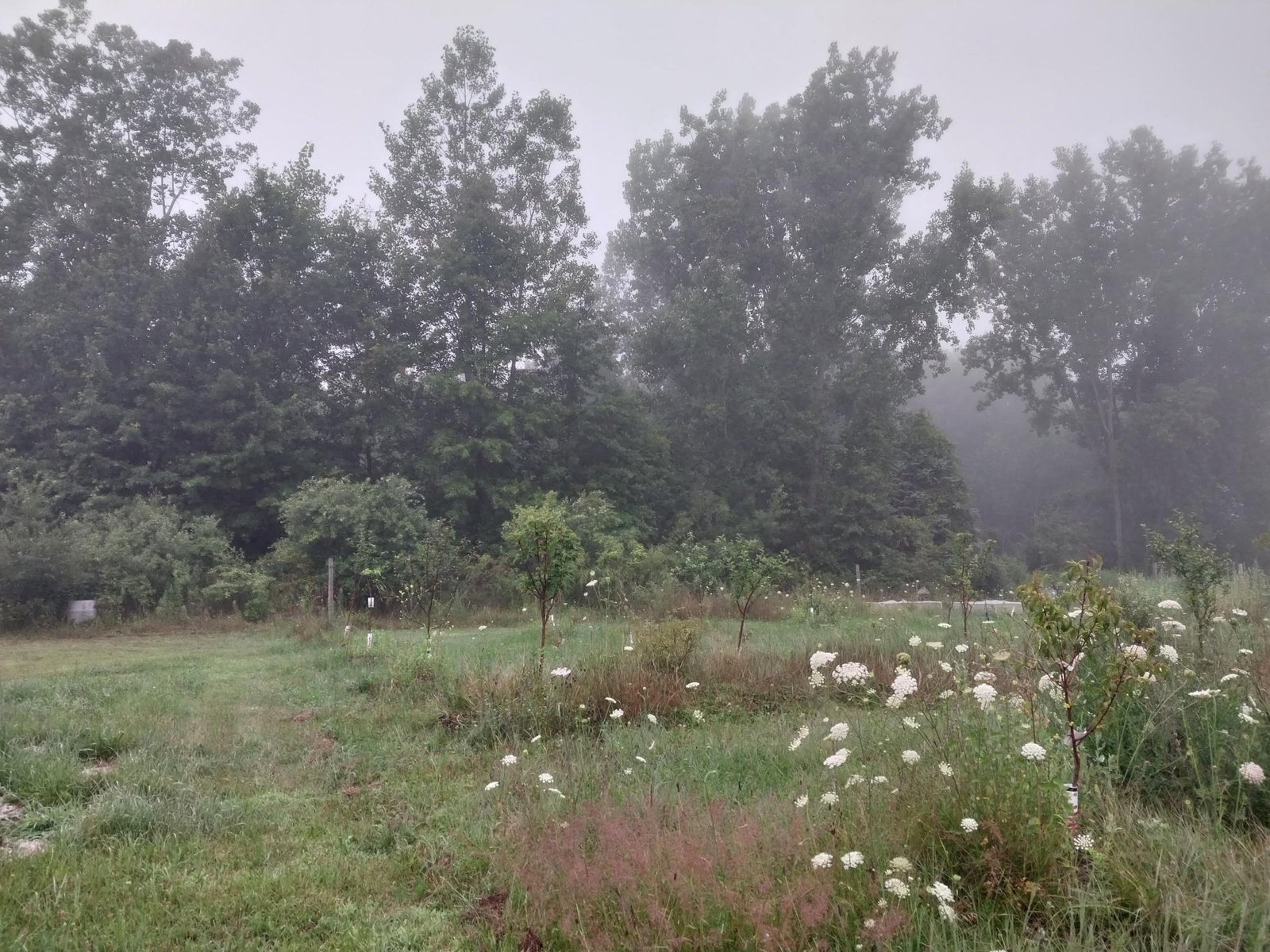
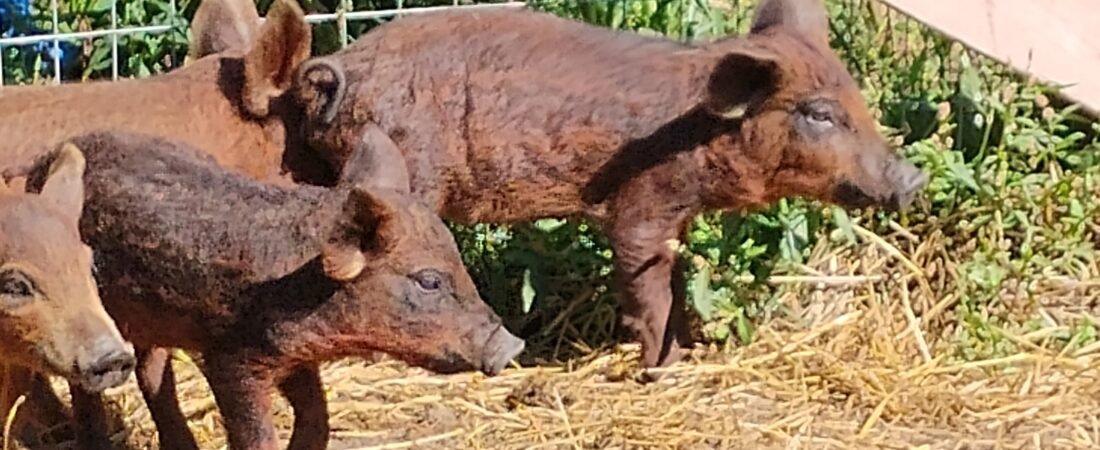
There are four new faces at Grateful Mess Homestead. They’re still getting settled in, figuring out their new surroundings, and deciding whether or not they approve of everything we’ve built for them. So far, I’d say they are doing just fine.
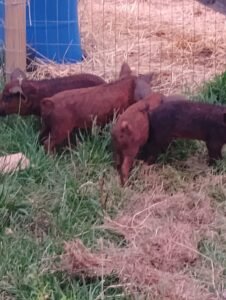
So, what are Mangalitsa and Idaho Pasture Pigs?
If you’ve never heard of either of these breeds, you’re definitely not alone. We hadn’t known much about them when we first started looking into pigs either. Here’s a little bit about each breed and why we were interested in this cross.
Mangalitsa
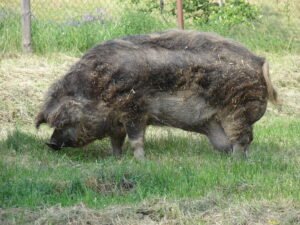
Mangalitsa is a heritage breed originally developed in Hungary. They’re probably best known for their curly, woolly-looking coats. They are known for producing pork with a high amount of intramuscular fat, which gives the meat its characteristic marbling and rich flavor. They’re also known for being hardy pigs that can do well in outdoor environments.
They’re slower growing than some of the pigs commonly raised for commercial pork, but that slower growth and heavier fat deposition are part of what makes the meat so good.
Idaho Pasture Pig
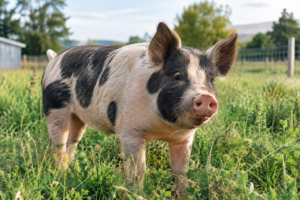
Idaho Pasture Pigs, or IPPs, are a relatively newer breed developed in Idaho specifically with pasture-based and small-scale farming in mind.
They’re known for being easygoing, hardy, and well suited to life outdoors. They’re also valued for their ability to forage and thrive in a pasture based system.
Why the Cross?
By getting a cross of the two breeds, we’re hoping to get some of the qualities from both sides.
The Mangalitsa brings more of the marbled pork with more fat while the Idaho Pasture Pig will hopefully bring a quicker growing time. We are curious to see exactly how these girls grow. No two pigs are exactly alike and we are learning as we go. That’s one of the good things about homesteading-we don’t have everything figured out before we start.
Sometimes you just have to jump in, get muddy and see what happens.
And with pigs, I’m pretty sure the mud part is guaranteed.
Why Pigs?
Yes-they 4 girls are being raised for meat.
Sometimes that part is hard to say out loud.
We absolutely want these girls to have a good life. They’ll have room to forage, explore, wallow, nap in the sunshine, and generally do all the ridiculous things pigs do.
We’ll feed them well, take care of them, and give them as much space and enrichment as we can.
But at the end of that life, they will become food for our family
Instead of simply picking up a package of pork at the grocery store, we’ll know exactly where these pigs came from. wht koind of life they had, and how they were cared for.
There’s something meaningful about that. There is also something a little humbling about it.
When you raise an animal yourself, you can’t completley separate the food on your plate from the living animal that provided it. You have to acknowledge the whole process.
Life at Grateful Mess Homestead
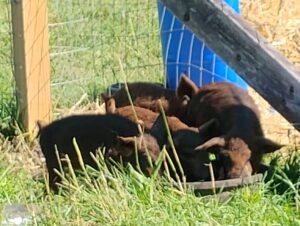
These girls aren’t going to spend their lives in a tiny pen with nothing to do.
We are working towards giving them an environment where they can actually behave like pigs.
That means rooting.
Foraging.
Digging.
Wallowing.
Eating.
Sleeping.
And if evidence so far is any indication, finding creative ways to make a giant mess.
We’re still figuring out exactly how we’r going to manage their space, feed, fencing, and pastures as they grow. Homesteading is rarely a perfectly finished project around here.
It’s more like:
“Well…that didn’t work. Let’s try this instead.”
And we’re ok with that.
We’ll share what works, what doesn’t, and everything we learn along the way.
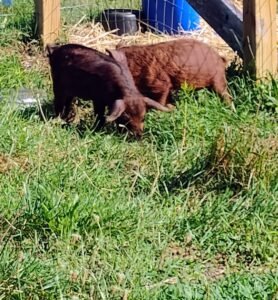
Raising our Own Meat
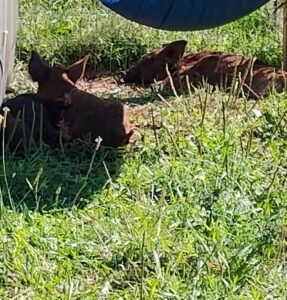
One of our goals here at Grateful Mess Homestead is to become more self-sufficient without pretending that we’re experts at everything.
We’re learning as we go.
These pigs are another opportunity to learn- not just about raising livestock, but about food, responsibility, and the work that goes into putting meat on our table.
There will eventually be a day when these girls are no longer here.
That’s the hard part.
But I also think there is value in being honest about that.
They aren’t pets.
They’re livestock.
And we’re going to give them the best life we can, right up until the end.
That’s what raising our own meat mean to us.
It’s not about pretending the hard parts don’t exist.
It’s about being willing to face them, take responsibility for them, and appreciate the food that comes from the process.
For now, though, we’re going to enjoy watching these girls grow.
We’re going to learn alot.
We’re probably going to get dirty.
We’re definitely going to get outsmarted by pigs more than once.
And I am sure there will be plenty of stories along the way.
So, come along for the adventure.